
 Send an inquiry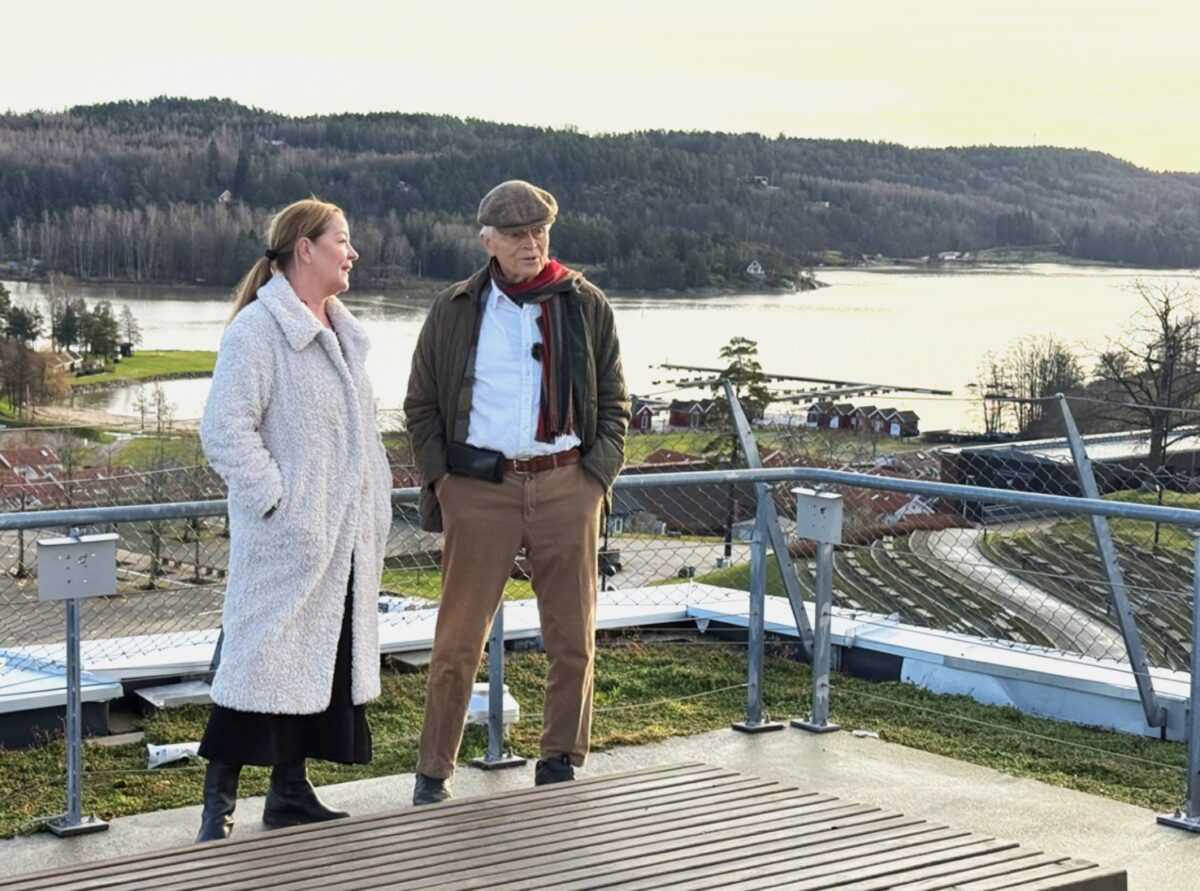
When Norwegian architect Niels Torp first came to Oslofjord, he chose to approach the site by sea, sailing into the Tønsberg Fjord along Norway’s southeastern coast.
From his sailboat, he watched the landscape unfold. The terrain slopes gently towards the water, and the skyline is open. Large buildings would have appeared as intrusive elements.
One thing became immediately clear: this was not about placing buildings in a landscape, but about shaping the way people meet.
“I quickly realised this should not become a closed complex. It had to feel like a place you move through, not a building you enter.”
A view from the sea
Approaching from the water was a deliberate choice – to understand the whole before the details.
From the fjord, the landscape reveals itself clearly. The site opens towards the water, and any dominant structure would stand out heavily against its surroundings.
With experience from large-scale international projects, Torp quickly recognised what the site could not accommodate: a single, dominant volume imposed on the landscape.
When scale needs to feel human
The challenge was significant. The site needed to accommodate thousands of guests – something often solved with one large, monolithic structure.
Here, a different approach was chosen.
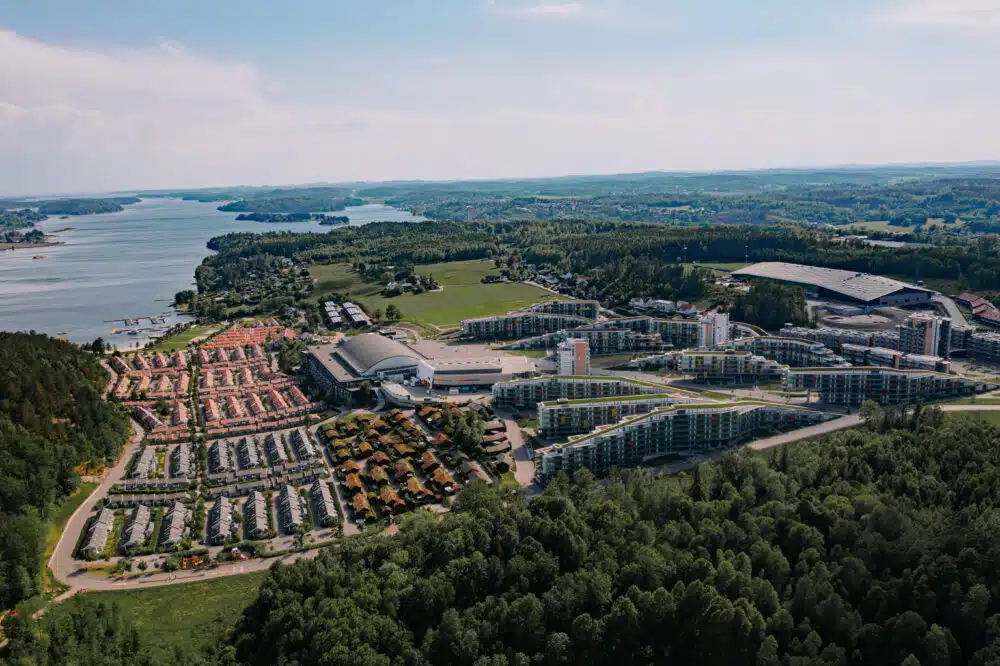
The area was divided into smaller volumes that together form a cohesive whole. The buildings step down towards the fjord, while openings between them allow light and views to pass through.
The terrain is used actively to create orientation and movement. Visitors move between buildings, rather than within one single structure.
A modern village
Instead of monumental structures, the idea of a modern village emerged.
Each building has its own character. Some lean forward, others pull back. Streets, passages and stairways are just as important as the buildings themselves.
“A large development can easily become overwhelming and alienating. You have to break it down. A building should never shout.”
When complexity becomes invisible
Behind the experience lies an extensive logistical system.
Deliveries, kitchens and operations are placed within an underground network of tunnels. The result is a car-free and calm environment for guests.
The central building acts as a hub, where indoor and outdoor spaces can merge into one continuous arena. What is complex behind the scenes feels simple for those experiencing it.
Architecture that stands the test of time
When Niels Torp visits Oslofjord today, he sees a place that has aged well.
Materials have been chosen to mature with dignity, and the design makes use of natural light and the terrain. For him, sustainability is about creating something worth preserving.
More than buildings
For Torp, the volumes themselves are not the most important part.
What matters is what happens between them.
What began as a view from the sea has become a place shaped for people – a setting designed to bring people together, without the architecture getting in the way.
Oslofjord needs to be experienced. Get in touch to arrange a personal tour, and let’s explore the possibilities for your next project together.