 Send an inquiry
As much as 95% of Oslofjord’s energy is renewable
Multi-purpose facility for local sports teams and clubs
Major investments in the local environment



As much as 95% of Oslofjord’s energy is renewable
Multi-purpose facility for local sports teams and clubs
Major investments in the local environment
Oslofjord has been built with a particular focus on the environment and its surroundings. Heat is mainly produced from renewable energy in our own on-site energy centre, and all parking in the hotel village is underground, so the outdoor areas between the buildings are car-free.

To ensure our entire convention village has access to clean energy, with both the climate and economy in mind, significant investments have been made over recent years.
The energy center ensures that at least 95% of the energy produced at Oslofjord is from renewable energy sources. The UN Sustainable Development Goal 7 is clean energy for everyone, and Oslofjord wants to support this goal.
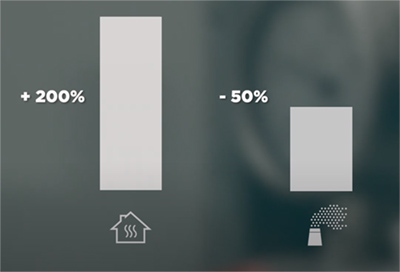
A building mass of about 250,000 m² requires a lot of energy for heating and operation. Despite this, since the development, we have doubled energy production for heating, but halved climate emissions at the same time.
The 16 hotel buildings are built to the Norwegian low-energy standard NS 3701:2012, with support from Enova, and are placed in the landscape to make use of light and sun. All parking is underground, so the outdoor areas between the buildings are car-free, in line with UN Sustainable Development Goal 11.7 on safe and accessible green and public spaces.
It is important for Oslofjord Convention Center AS to be a socially responsible player in the market. Therefore, we have entered into an agreement with Sandefjord municipality which ensures that our multi-purpose hall (Oslofjord Arena) can be used by local sports teams and clubs, several of which are already regular users.
We contribute to safety by enabling Oslofjord to be used as a center for evacuees and relatives in the event of a disaster in Sandefjord or in the counties of Vestfold and Telemark.
We have contributed to a better, more environmentally friendly infrastructure in the immediate area of Melsomvik. A five-kilometer section of water and sewage pipelines were replaced, and NOK 25 million was invested in the municipal pipe network, which ensured an increase in capacity that will meet the municipality’s needs for many years to come.
As a direct result of the development, NOK 6 million has also been invested in the construction of a coastal path and new recreational area at Rosnessodden. Furthermore, we have contributed to improved road standards with pedestrian and bicycle paths.
In recent years, significant investments have been made in our own on-site energy centre, so that heat is mainly produced from renewable energy.
In 2018, the on-site energy centre was officially opened to provide Oslofjord Convention Center with renewable heat. At least 95% of the energy produced in the energy centre is renewable. UN Sustainable Development Goal 7 is affordable and clean energy for all, and Oslofjord aims to support it.
Energy is the largest contributor to climate change, and the development of Oslofjord has been a unique opportunity to establish efficient energy systems for many years to come.
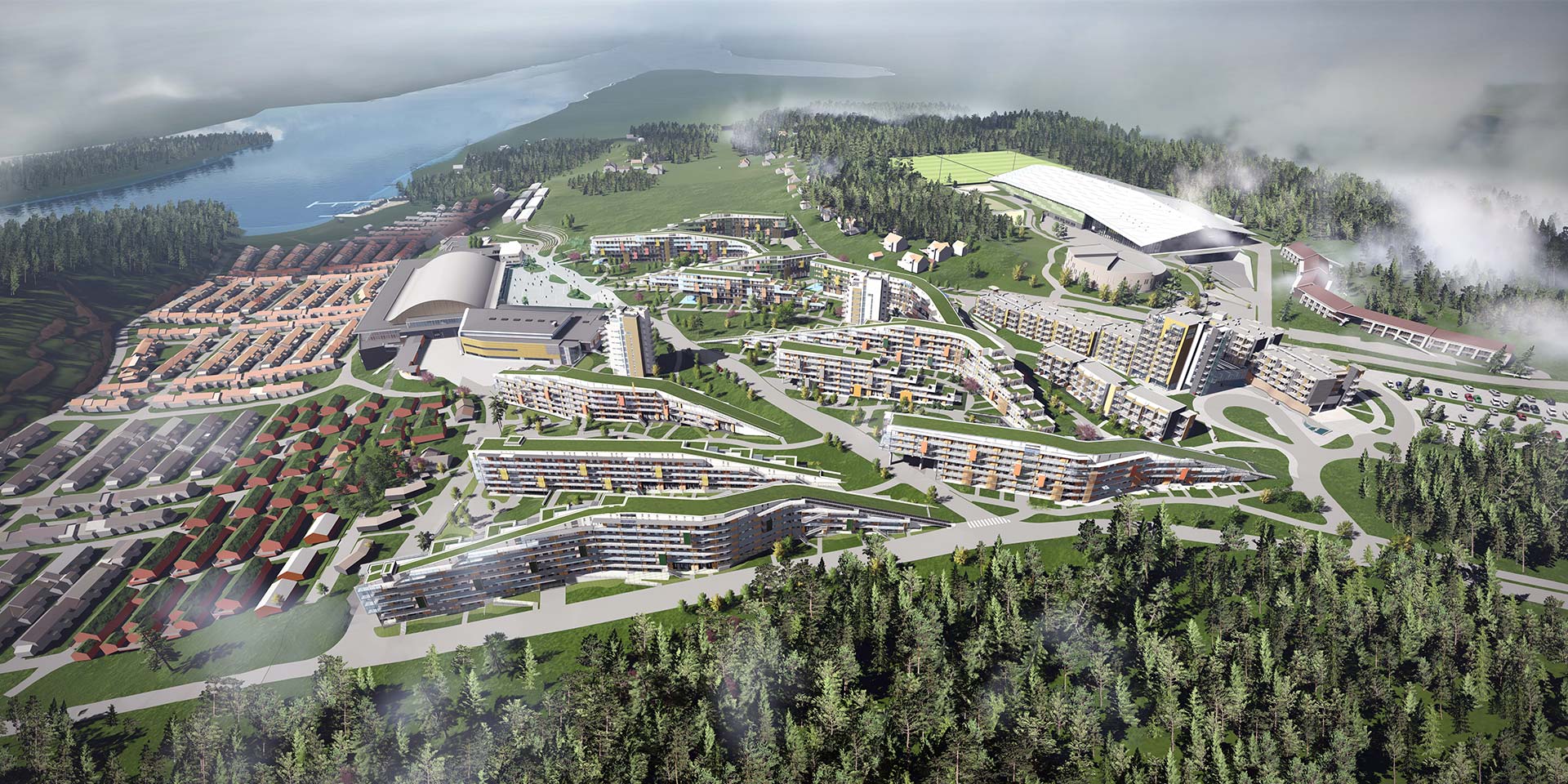
With a total building area of around 250,000 m², including 16 new hotel buildings, a multi-purpose hall, an ice rink and a conference hall for several thousand people, plus underground parking with around 2,500 spaces, a lot of energy is needed for heating and operation.
Using wood chips, bio-oil and heat from seawater, the on-site energy centre supplies the entire new hotel village, the multi-purpose venue Oslofjord Arena and parts of the original site with energy that is at least 95% renewable.
Technology has developed rapidly since the previous expansion of the site in 2002–2006, but the site was built with the future in mind then too. The energy centre installed beneath the convention centre at that time is now connected to the new energy centre at Oslofjord Arena, so the two systems work together.
454 solar panels have been installed on the roof of Convention Center North, with an estimated production of around 167,000 kWh a year. The roof of Oslofjord Arena has been prepared for more.
The 16 hotel buildings are built to the Norwegian low-energy standard NS 3701:2012, with support from Enova, and are placed in the landscape to make use of light and sun.
In the new hotel village, all parking is underground. This has clear benefits, both aesthetic and practical. The parkland around the hotel buildings offers space for recreation, play and time outdoors in a safe, car-free setting, in line with UN Sustainable Development Goal 11.7 on safe and accessible green and public spaces.
Taking responsibility for the community matters to Oslofjord Convention Center. Through an agreement with Sandefjord Municipality, local sports clubs and associations have access to the sports facilities, and several are regular users. Oslofjord can also be used as a centre for evacuees and relatives in the event of a major incident or disaster in Sandefjord or elsewhere in Vestfold.
The development agreement between the foundation and the municipality required the developer, Oslofjord Property, to make several investments in the local area, including better water and sewage infrastructure in Melsomvik.
Before construction began in earnest, Oslofjord built a new pumping station by the beach in Melsomvik and five kilometres of new sewage pipeline to the Vårnes treatment plant. There had previously been problems with polluted bathing water caused by leakage from the sewage network, and the new pumping station was built to solve this. The investment also increased capacity to meet the municipality’s needs for many years to come.
As a direct result of the development, a coastal path and a new recreation area have been created at Rossnesodden, east of the site. In a wooded area that had become quite overgrown, 2.5 km of coastal path was cleared, marked and opened to the public. The result is a more open cultural landscape with views of the countryside and the sea. Parts of the path are universally accessible, as are the beach and the toilet building at Rossnesodden.
As part of the development plan, Skjærsnesveien from Melsomveien to Oslofjord was substantially widened and resurfaced, with a new roundabout at Brunstadveien and a separate pedestrian and cycle path from county road 303 all the way to the site. To ease traffic on Brunstadveien, a new access road and a pedestrian and cycle path were built directly from Skjærsnesveien to Oslofjord Convention Center, and the exit from county road 303 was given its own turning lane. In addition, 1.9 km of high-voltage cable has been laid underground instead of overhead lines.